Posts

How AI could change team leading - bright future or dystopia?

 Let me start with a few arguments: Team leaders and team leading is a big expense for any organization Minimizing the cost of team leading can be done by: Maximising team sizes Adding ordinary work to team leaders Team leading is very valuable work, but it is usually not directly useful for the customers of the organization Therefore looking at it purely financially the most efficient organisations are e.g. Bolt, Uber, Wolt and the likes where the people delivering the value to the customers don't have team leaders. A little bit less efficient are teams of (fast food) restaurants where the team-lead takes care of leading the team, but also cleans the tables or grills a hamburger if needed. Now, with the emergence of AI we should think what are the tasks that team leaders are doing that could be perhaps given to AI and thus maximise team sizes and add "ordinary work" to team leaders. Here are some thoughts: - Recruiting: AI is already involved in various phases, but recru...
2022 - The year of breakthrough of hybrid and remote work. The massive impact this will bring

Image
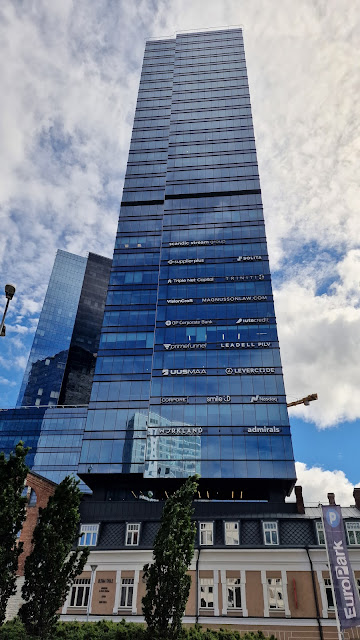
(Neither ChatGPT, nor any other AI was used to write this article. Photos by me. But the illustrations were created by Midjourney AI. You can find the Midjourney command in Italic at the footer of each illustration.)  In this post I will cover two topics. Firstly, the hybrid and remote work practices and its challenges. Secondly, some thoughts on the huge impact the hybrid/remote work will bring about small-townization. Part 1 - Where we are with hybrid and remote work? A few weeks ago there was a fire drill in the office building of Solita Tallinn. The alarm went on and everybody in the building (the one on the photo) had to evacuate to the street. While waiting on the street for the drill to end we did a small calculation. We calculated that there should be about 800-1000 workplaces in the whole building. However, the "evacuated" crowd was only 150-200 persons strong. So roughly 10-30% of the workplaces in our office building are used. This matches the numbers we are seein...

Predictions about (renewable) energy

Image
Putin turning off gas from Europe and thus fossil fuels hitting record prices is.....very good! Some fundamentals: - Capitalism (mostly) works: people prefer to pay less, companies prefer to invest into areas where there is more business and more profits to be made. It seams silly to write this statement but in energy production we have seen a lot of hope and wishes, but in reality - if making electricity from natural gas is the cheapest option then companies will build gas powerstations no matter how green their logo is. - Politicians (and when it comes to economics then also dictators) (mostly) do what people want. How do you know what people want? Well you can listen to what they say, but the true wishes are demonstrated by what they buy. So if people buy SUV-s, vacation trips to the other side of the world and fast-fashion, then the politician who wants to be popular, has to work on cheap fuel prices to ensure this.  For example, if people would want to stop climate change then...

Misconceptions regarding electric cars

Image
EU's Fit for 55 plan includes quite ambitious emissions reduction targets for the car industry and this has initiated a big discussion in the industry and among thought-leaders. I would like to point out two topics where our thinking tends to go wrong and where looking at the wider picture makes sense Let's think wider than just switching the power source from internal combustion to battery-electric. Here is a photo of one of the first cars made. It is a 1896 Arnold Benz, whose driver Walter Arnold received the worlds first speeding ticket for driving 13km/h with it. As you can see the car looks like a horse carriage minus the horse. It was only a few decades later that cars were considered to be cars and not horse carriages with engines and could therefore be designed differently. At present day we have a similar problem and are stuck in the thinking that an electric vehicle must be a car where everything must be otherwise the same only the engine to be a battery powered elect...

IT ja konsultatsioonifirmade kasvust Solita näitel

Image
Esinesin 22.10.2020 Äripäeva korraldatud IKT konverentsil ja rääkisin IT ettevõtete kasvust Solita näitel. Jagan ka siin mõned mõtted sellel teemal. Kui mina liitusin Solitaga aastal 2017, siis olid Eesti ja Rootsi esimesed riigid väljaspool Soomet kus Solita avas oma kontori. Tänaseks on Solita ekspertide arv ületanud 1000 ja oleme kohal kuues riigis: Soomes, Rootsis, Eestis, Taanis, Belgias ja Saksamaal. Kasv on olnud kiire. Osaliselt on kasv toimunud ka läbi kahe ettevõtte - Sparks ja Ferrologic - ostmise, aga ka orgaaniliselt. Allpool olevad mõtted ongi orgaanilise kasvu kohta, sest M&A vajab ilmselt omaette käsitlust. IT, disaini ja muid konsultatsioonifirmasid iseloomustab see, et firma äri suurus on otseses seoses töötajate arvuga. Erinevalt toote- ja teenuse firmadest tähendab kasv uute ekspertide palkamist ja uute klientide ning projektide müüki. Kolm modus operandi -t Välismaale laienemiseks või ka oma kodumaal laienedes on konsultatsiooni ettevõttel kolm viisi toimimisek...

Opening up

Image
Today Estonia, and many other European countries are opening up some of the COVID-19 quarantine measures. For me, it seems strange, than in evaluating choosing the measures to be opened there is almost now discussion on how important or even critical the activity is for society and people. What is the damage if this activity is not available. For example, dentists and hairdressers were both opened only today. Swimming pools are opened, but schools are not. Opening up football leagues or holding the Olympics seems to be among TOP-3 topics in the news. To provoke a discussion around this question I drew a graph. This is the type of two dimensional diagram that should be the basis on deciding on quarantine measures. Naturally, this includes only a very limited number of activities and we can argue about the importance of activities but I am sure that everybody agrees for example that: - Food processing is more important than making toys - School is more important than hobbies -...

How we will beat the virus

I am not a virologist nor do I have a medical education so the analysis underneath should be taken as an idea or a suggestion. I am a hobby-historian, follow news actively and I can take credit for the fact that I bought face-mask already in January. Then they were freely available, cost 0,1eur a piece and everybody thought that I have a paranoia when I bought them. So how we will beat the virus. It is actually quite straightforward. States, cities and families have always beat diseases in principally the same way: by raising the level of hygiene. Typhus and cholera was beaten by cleaning the water and building proper sewage systems. Washing hands, washing teeth, wearing underwear, vaccination, following strict rules in food production - all these measures have served us by eliminating the risk of getting one or more diseases. Mind you, some countries have not implemented these measures and thus bare the consequences: cholera in Haiti, hepatitis in India etc. With Covid-19 the situ...

How the coronavirus related quarantine will influence the economy

We have now been working from home for a little more than a week due to the coronavirus quarantine. Based on this first experience it is possible to make some predictions on how the situation will influence the economy in the near future. The results might look a bit scary, but the logic is quite straightforward. Very important thing to understand about how the economy works is the concept that "Your spending is someones income". Meaning that in the big picture money is not something physical, but an abstract concept - it is more like a measurement unit that measures value or work. Therefore saving money is different from saving something physical. If you save for example sugar then you will later have more sugar that you can then spend. If you save money then this is away from the overall process of economics and if you don't pay the others, then the others will not pay your salary. Now when we have the first real experience on remote working and living, we can look ...

The technical innovation that might help us avoid the climate crisis and extinction of species ....and this is not the usual stuff.

I have been following the climate crisis and other global threats to humankind since 2008. It has actually been quite depressing. If you remember then in 2008 the global threats that everybody was talking about were: - Peak Oil - Food crisis - Exponential growth of population - Global warming. The only one of those, that has been "solved" or actually postponed a little (by inventing economically viable fracking), is Peak Oil. Unfortunately, this postponing has made the problems of global warming and extinction of species now much worse.  Overall between 2008-2019 all indicators of global warming and the extinction of species have followed the pessimistic patterns. The situation is bad and becoming worse fast.  The fundamental problem why humans are not doing anything about reducing CO2 or methane emissions is, that doing so would conflict with (the perception of) how good our lives are. As for most of us, better lives mean more things and more travelling. So "be...

Is there a relation between good universities and average salaries?

Image
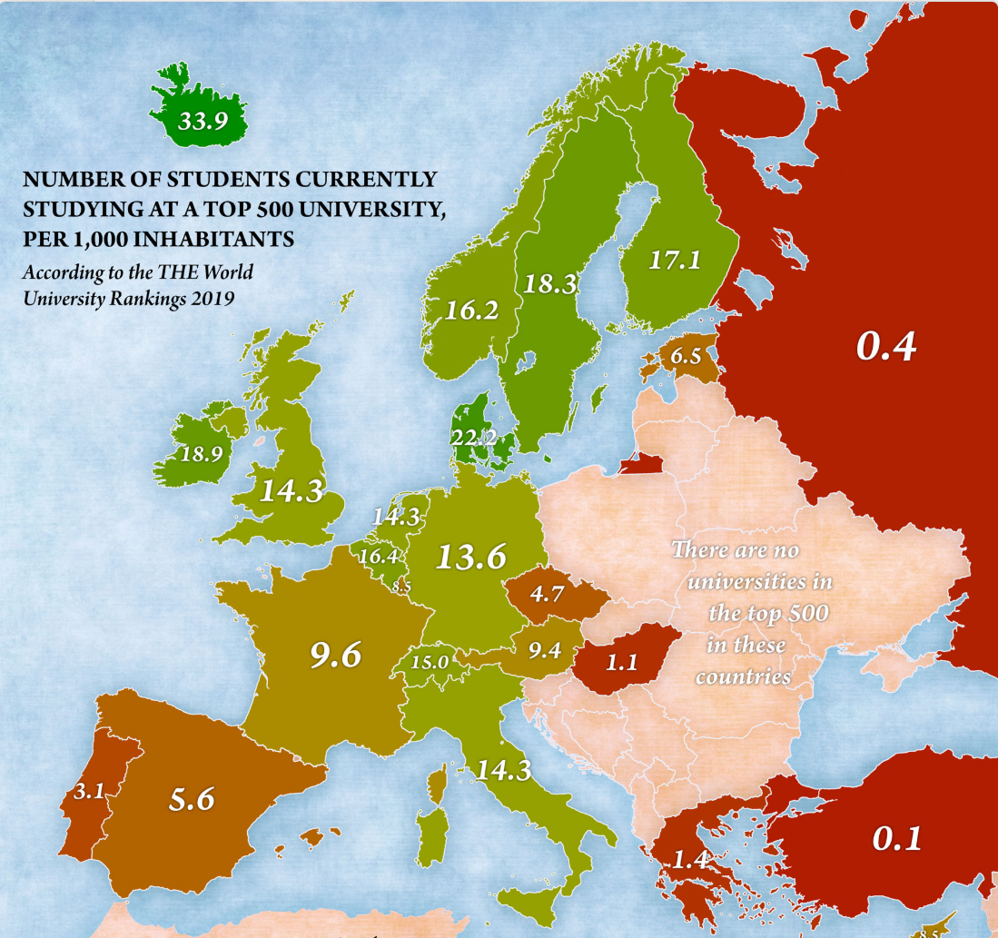
This map is courtesy to Jakub Marian and can be found here:  https://jakubmarian.com/number-of-top-ranked-universities-by-country-in-europe/ (You can also find many other interesting maps on jakubmarian.com!) The latest map from Wikipedia showing the average net salaries in European countries These two together in one graph: Good universities => higher salaries!

Last mile delivery revolution in Estonia

Image
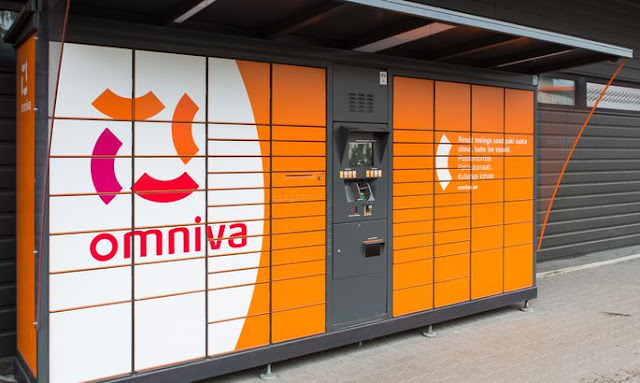
The revolutions that change the government tend to be noisy and bloody affairs, but the revolutions in technology and economics happen rather silently. This is because true technical revolutions happen when people start to take a new phenomenon as a normal everyday thing and don't even notice that they changed their behaviour. And one such thing is now happening in Estonia - the radical change in the last mile delivery. As an indicator, here is a list of changes that have happened in the last 5 years: There are now 3 parcel terminal networks operating in Estonia. Omniva, SmartPOST and DPD. Therefore there is competition and prices are driven down. Most E-shops are integrated with some or all of them. There are at least 5 online grocery supermarkets that offer home delivery: Selver, Coop, Fresh and Go, Barbora (the shop previously known as Maxima) and Prisma. One of the latest innovations is done by Coop, who offers grocery lockers that are refrigerated and to where you c...

Average salary and ease of doing business

Image
One of the main parameters of an economy is the average net salary and I have been following that on my blog for some months now. Here is my short post about the last comparison: http://www.pilveraal.ee/2018/06/euroopa-keskmise-palga-areng-2018.html As I work in a data and IT company Solita and am surrounded by data scientists, engineers and developers, then I cannot only settle with following the stats but want to find the reasons for some economies doing better than the others. As a first step, let's see if the countries Ease of doing business ranking is related to the average net salary or can predict the change of the salary. If there is a correlation then it gives a clear message that working with the things that are measured by the Ease of doing business index makes people richer. No political discussion needed just copy what countries on the top of the list are doing and you get rich. :-)  Underneath you will find the graphs for the EEA/EU countries on that, but...